Briefing for MSPs on UCU Edinburgh’s ongoing dispute with University management
UCU Edinburgh Co-Presidents have written to MSPs today on behalf of UCU Edinburgh members with a briefing on our dispute (full text below).
Students and staff are grateful to our elected representatives in the Scottish Parliament for the support they have shown already - visiting picket lines, submitting motions, speaking at and attending our rallies, and showing solidarity in many other ways.
UCU’s asks are simple: we want University leadership that prioritises staff working conditions and student learning conditions. These, after all, are the core elements that contribute to our University’s excellence.
Higher education is a public good, evidenced by its provision of free university tuition to its citizens. Given this, universities should be run as public institutions, not private corporations.
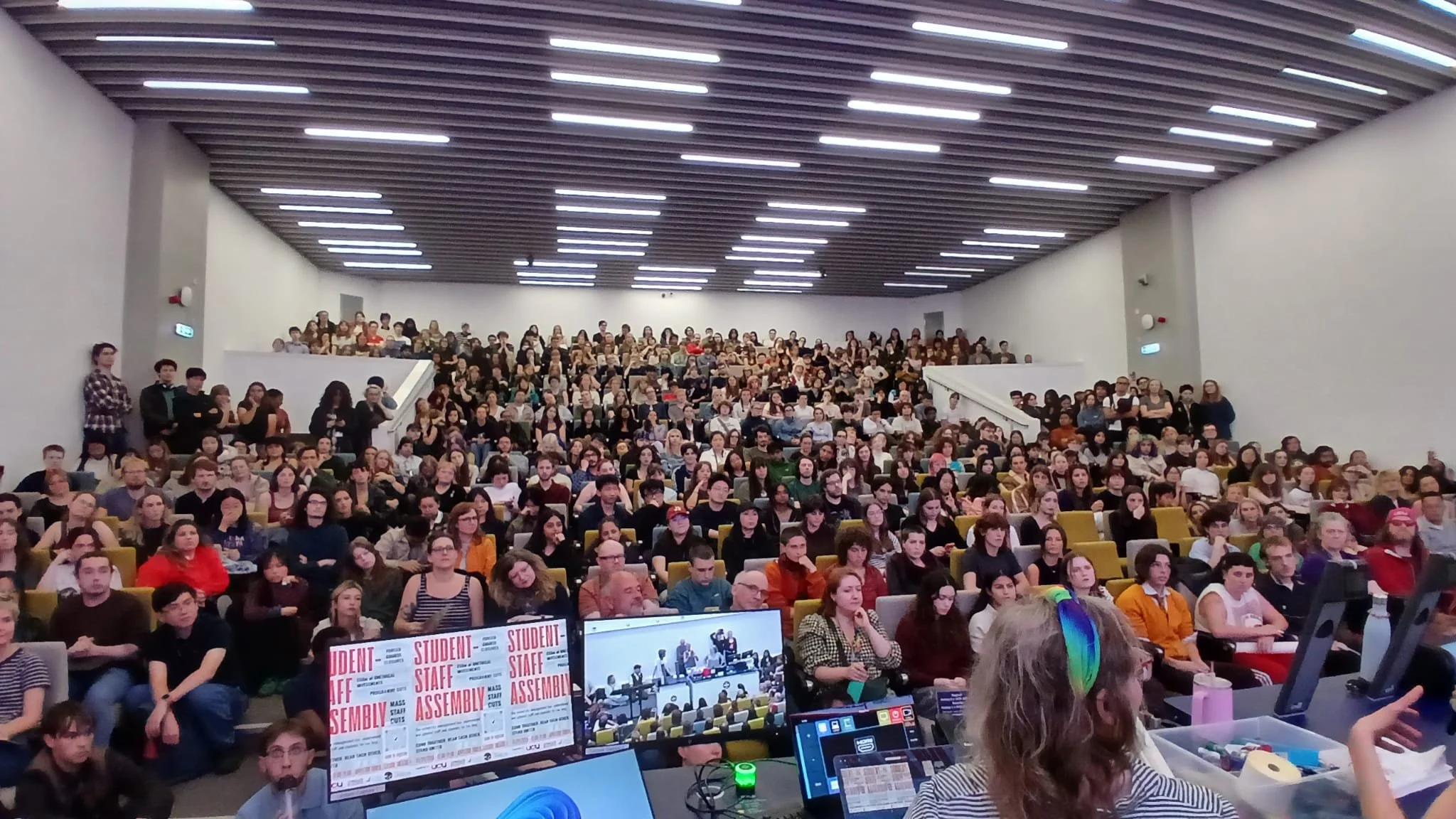
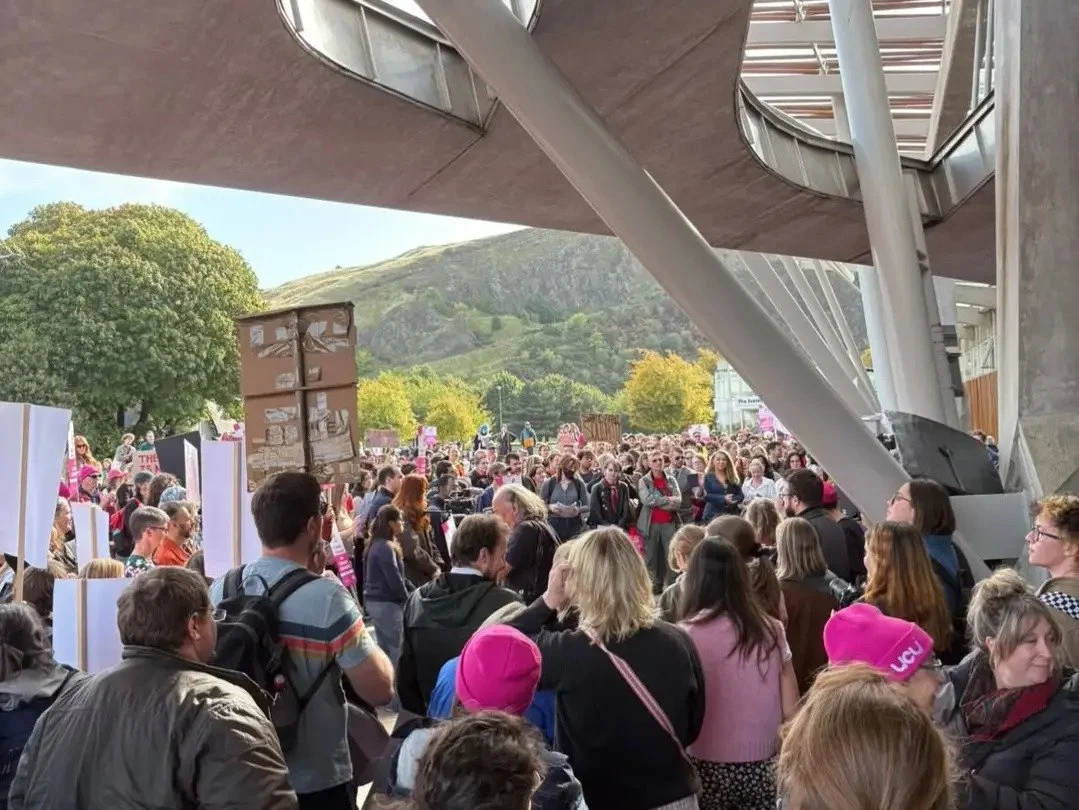
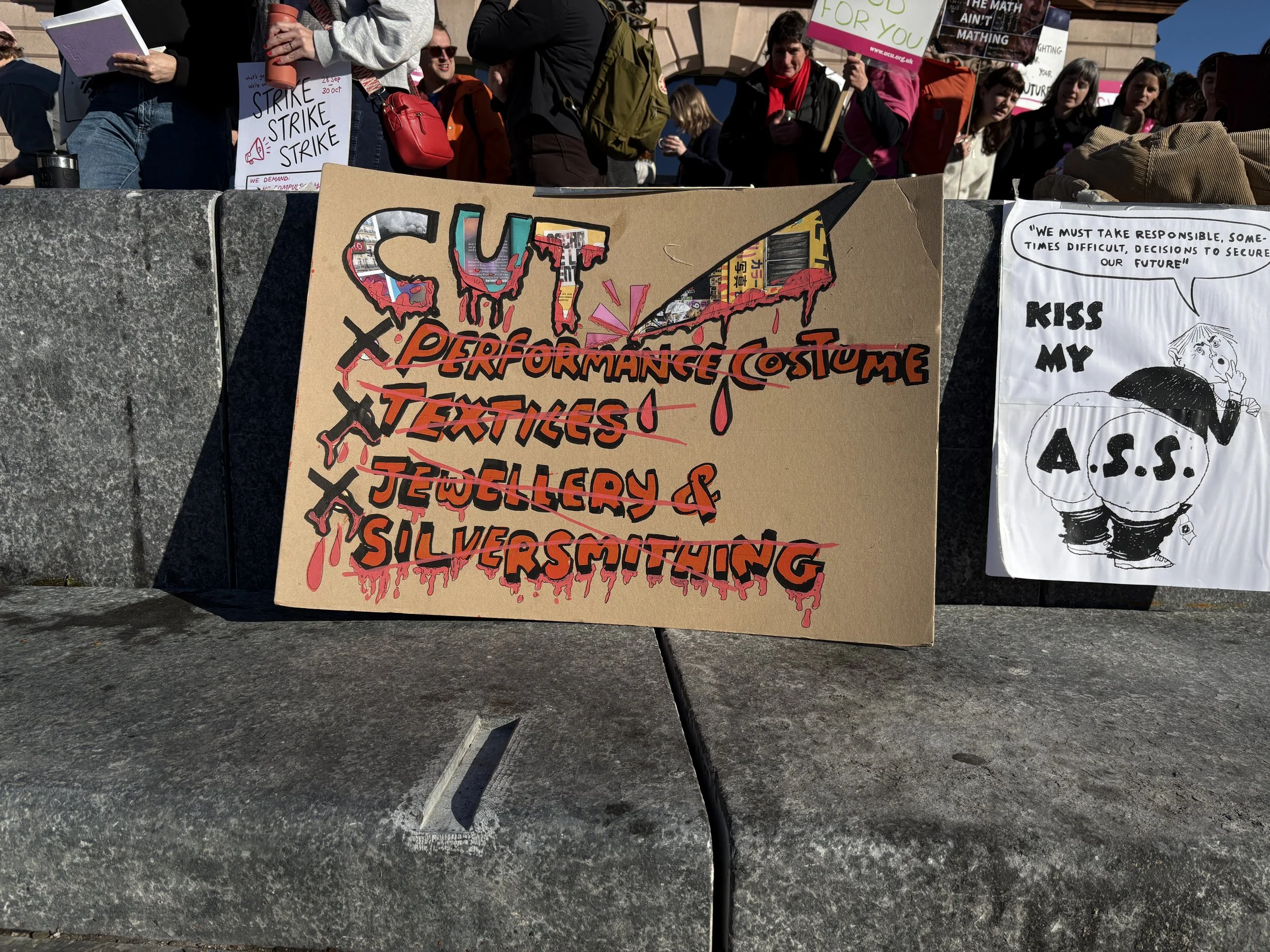


UCUE/UoE Dispute Briefing for MSPs
The context
In November 2024, the University of Edinburgh’s Principal and Vice-Chancellor, Peter Mathieson, sent an all-staff email to more than 17,000 employees announcing that the University was in financial difficulty and that job losses – especially ‘compulsory redundancies’ – could not be ruled out.
Four months later, in February 2025, the university's senior leadership team launched a ‘cost-saving programme’ to cut £140 million from its annual budget; £92 million would come from shedding staff.
How could one of the richest universities in the UK suddenly have a £140-million-sized hole in its budget? No satisfactory explanation has been given.
In June 2025, when pressed by MSPs on Holyrood’s Education, Children and Young People Committee on the possible causes of a deficit big enough to warrant these cuts, Principal Mathieson admitted ‘there is no deficit’. Yet there has since been no revision of management’s contradictory claim that the University’s finances are in grave jeopardy.
The University’s webpage dedicated to the cuts declares that 'costs are rising faster than our income’. Under the heading ‘Shaping Our University’s Future’, it states that the University’s financial position would be ‘far more fragile’ without ‘the actions already underway’.
In fact, the University is wealthier than ever before. Its total yearly income for 2024-25 was £1.477 billion, 38% of which comes from student tuition fees, and it continues to grow.
Mismanagement in the lead-up to the current dispute
Since taking office in 2018, Principal Mathieson has dismissed the concerns and welfare of staff and students – the people who make the university what it is – and instead prioritised capital building projects and large contracts with software and consultancy firms.
This includes the “People and Money” debacle, in which University management commissioned a replacement finance system which wasn’t fit for purpose: it failed to pay staff and suppliers over an extended period, and ultimately cost more than double its original £14 million price tag.
It also includes a £750k consulting contract to a controversial firm brought in to oversee the ongoing budget cuts.
In light of repeated concerns about governance, transparency and accountability, Principal Mathieson accepted a 2023 motion of no confidence over the finance system debacle, and later that year the University Students' Association voted for his resignation with a 95% majority.
Following the announcement of staff cuts in 2025, the Senate, the University’s supreme academic body, approved a motion of no confidence in the University Executive’s leadership in relation to the financial situation. Despite having lost the confidence of University students and staff, Principal Mathieson intends to continue in post until the end of his term in 2028.
The current dispute
The University of Edinburgh is world-renowned for its research and teaching, which is a direct consequence of the dedication and hard work of its staff.
UCU’s asks are simple: we want University leadership that prioritises staff working conditions and student learning conditions. These, after all, are the core elements that contribute to our University’s excellence.
The senior leadership team claim they are listening and engaging meaningfully with UCU, but unfortunately this has not been the case. They continue to plough ahead with staff and programme cuts, without any meaningful consultation with staff or students.
Nearly 950 posts have already been lost to date, in addition to many ‘hidden redundancies’ in which hourly paid and fixed-term workers’ contracts are cut. In total, University of Edinburgh’s planned cuts are estimated to be 1,800 job losses.
90 programmes have already been cut in the College of Arts, Humanities and Social Sciences. These include flagship programmes in Celtic and Scottish Studies, Outdoor and Environmental Education, and craft and design programmes at the Edinburgh College of Art.
In cutting programmes at the Edinburgh College of Art (ECA), in particular, University management is in violation of Resolution No. 6/2011 of the University Court outlining the terms of the merger of ECA with the University wherein University management is required to ensure that “Arrangements made for admission of students, the courses to be taught, the methods of teaching, instruction and pedagogy generally… take full cognisance of the importance of its distinctive academic character and identity being conserved and enhanced.”
For students, staff cuts means that class sizes have increased, and they have less support and time with university staff. Not only the education of current students but also of future generations is at risk: one example is Study Away and Edinburgh Global team (who support student exchanges such as Erasmus+, and who play a vital role in maintaining the University’s international profile), where 17 out of 28 staff members are now facing redundancy. Students are well aware of staff working conditions, and have been incredibly supportive: joining staff on picket lines and organising on their own initiative.
Staff cuts began with hidden redundancies (e.g. blocking temporary contracts from being extended), then a ‘voluntary’ redundancies scheme which has led to the departure of more than 800 staff, and now the announcement of impending compulsory redundancies. Many staff who have taken voluntary severance left as they said they felt ‘bullied’ to leave.
Unsurprisingly, for staff who remain, the extra workload resulting from these cuts combined with the threat of compulsory redundancy hanging over us, has led to an unacceptable degradation of staff working conditions.
All this is why, reluctantly, UCU Edinburgh members are taking part in five weeks' strike action.
UCU’s demands for University management:
Rule out compulsory redundancies (as several other universities have already done).
Halt hidden redundancies (i.e. stop blocking temporary contracts from being extended, and end cuts to hourly staff budgets).
Avoid cuts to staff budgets by prioritising savings in non-staff budgets (e.g. capital investment).
Ensure that staff workloads remain within contracted hours/reasonable work limits.
Extend redundancy consultation [legal minimum is 45 days] for as long as necessary to fulfil the requirements of meaningful consultation.
What can MSPs do to help?
The University of Edinburgh is a public institution that receives enormous amounts of public funding, and as such should be subject to public oversight.
Higher education is a public good, evidenced by its provision of free university tuition to its citizens. Given this, universities should be run as public institutions, not private corporations.
We therefore encourage you to:
Support the motion submitted by MSP Q Manivannan on “Reversing the Closure of Craft Courses at Edinburgh College of Art.”
Join our pickets and hear directly from staff and students impacted by the University’s mismanagement.
Hold a parliamentary hearing on the financial mismanagement and forced redundancies at the University of Edinburgh with Peter Mathieson (Principal), Kim Graham (Provost), Leigh Chalmers (University Secretary), James Gray (CFO) and other relevant senior management at the University.
Introduce legislation for stricter oversight of university management, to ensure democratic governance of universities where staff and students have a real say in decision-making, and university leaders who lose the confidence of their constituents are unable to remain in post.
UCU Edinburgh representatives worked incredibly hard to negotiate with management, to reach an agreement which could avoid enacting a five week strike. Senior management have again failed to present UCU members with any offer of meaningful conciliation, which is why staff are now on strike.
We thank you for your time reading this, and ask that you support University of Edinburgh staff and students in saving not only jobs but our education institution.